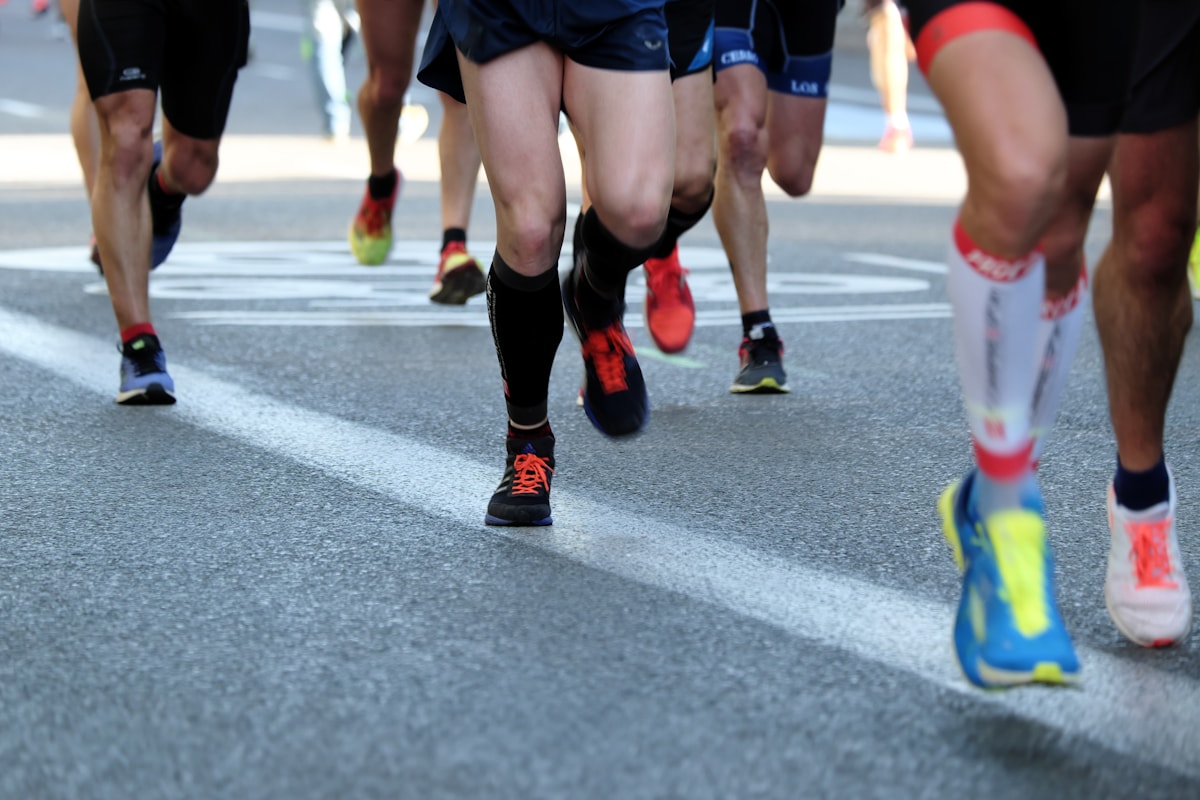
That nagging ache along the front or inside of your shin after a run has a name: shin splints (medial tibial stress syndrome). It's especially common in newer runners and anyone ramping up mileage. Here's how to handle it.
General information, not medical advice. Sharp, localised or worsening shin pain should be checked by a professional to rule out a stress fracture.
What it is
Shin splints is pain along the shin bone (tibia), usually from the muscles, tendons and bone tissue being overloaded by repetitive impact. It typically aches during or after running and is tender along the inner shin.
Why runners get it
- Too much, too soon — the biggest cause; ramping mileage or intensity faster than your body adapts
- Weak calves and lower-leg muscles that can't absorb impact
- Foot mechanics — excessive pronation or unstable footing
- Hard surfaces and worn-out shoes
- Sudden change in training, shoes or terrain
Settling it down
- Back off the volume and impact; swap some runs for low-impact cross-training (cycling, swimming) while it calms
- Ice the sore area after activity
- Strengthen the calves and tibialis anterior (toe raises) as pain allows
- Check your shoes — replace if worn
- Return gradually — don't jump straight back to full mileage
- If pain is sharp, pinpoint on the bone, or not improving, see a professional (to rule out a stress fracture)
Preventing the comeback
- Increase mileage gradually and consistently — let your body adapt
- Build lower-leg strength and ankle stability (eccentric calf raises, single-leg balance) — see our injury-prevention exercises and ankle stability guide
- Vary your surfaces and keep footwear fresh
- Reduce the micro-slipping that fatigues your lower leg — a snug, non-slip sock keeps the foot stable so the shin works less to compensate (why your feet slide →)
Frequently Asked Questions
How do I know if it's shin splints or a stress fracture?
Shin splints usually ache over a broad area along the inner shin and ease with rest. A stress fracture tends to be sharp, pinpoint pain on the bone that worsens with impact. If in doubt — especially with pinpoint pain — get it checked.
Can I run with shin splints?
Mild cases may tolerate reduced, easy running, but continuing at full load typically prolongs it. Cut back, cross-train, strengthen, and rebuild gradually.
How long do shin splints take to heal?
Often a couple of weeks to a couple of months, depending on how early you reduce the load and address the cause. Returning too fast is the most common reason they linger.
Do socks or footwear help shin splints?
Supportive, fresh shoes and a stable, non-slip sock reduce the wobble and fatigue that contribute to shin splints. They support recovery and prevention, alongside strengthening and sensible mileage.
Keep your stride stable. Shop VANTAGE socks → — non-slip grip and ankle support, S$30, free Singapore delivery.