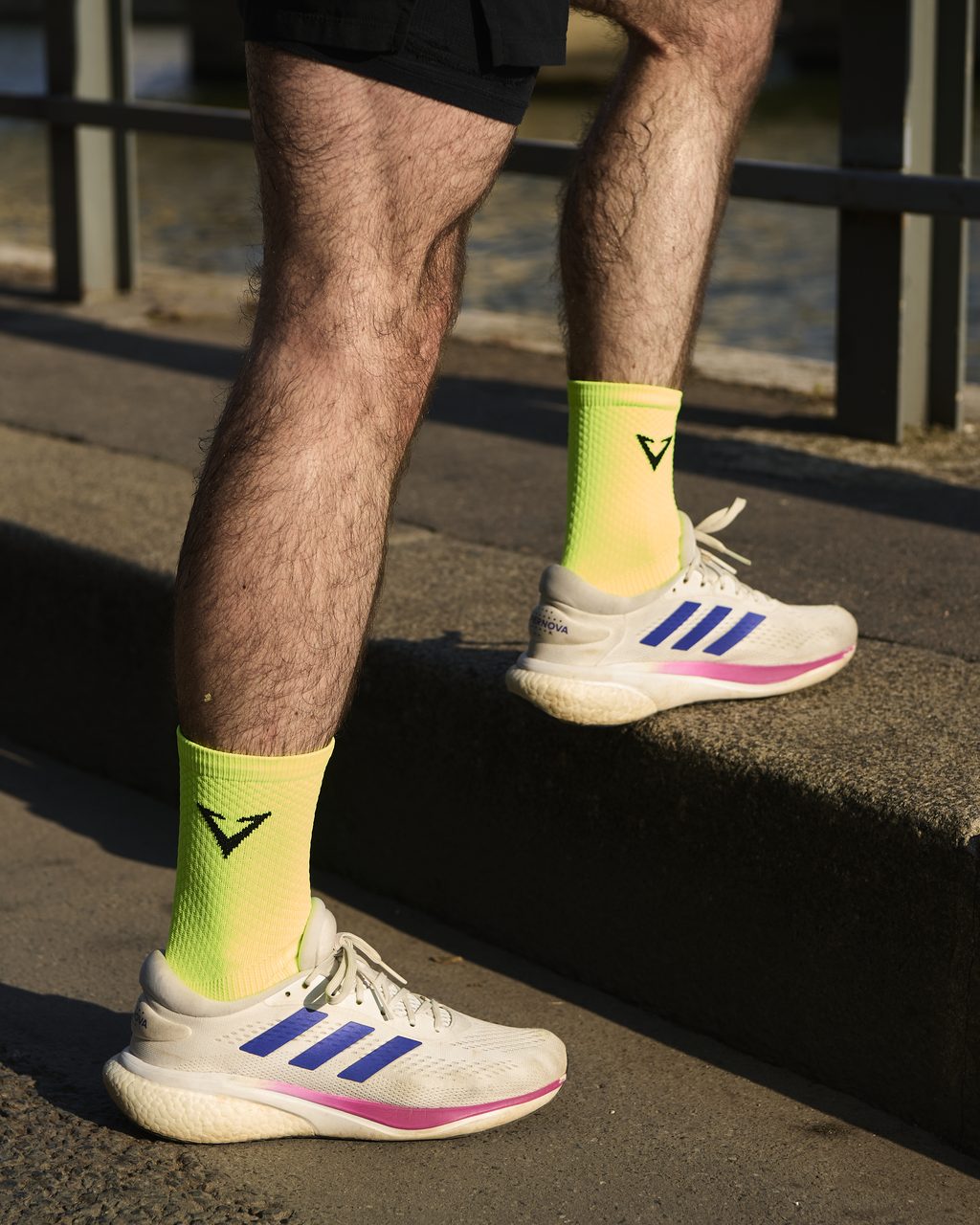
Compression socks are everywhere on race day — but do they actually do anything, or is it just marketing? Here's an honest, no-hype look at what they help with and who benefits most.
What compression socks are meant to do
Compression socks apply graduated pressure — firmest at the ankle, easing up the leg. The idea is to support circulation, reduce muscle vibration during impact, and limit swelling. VANTAGE's approach adds physiotherapist-designed taping compression around the ankle and arch specifically, to cut foot fatigue and support the joint.
What the evidence actually says
Let's be straight about it:
- Performance: Studies are mixed. Most don't show a big, reliable speed boost from compression alone. Don't expect a PB just from socks.
- Recovery & soreness: This is where support is stronger — many runners report less muscle soreness and perceived fatigue after long efforts, and reduced swelling. Several studies back the recovery angle.
- Swelling & "heavy legs": Graduated compression genuinely helps reduce lower-leg swelling, which is why it's also used for long flights and time on your feet.
- Comfort & stability: A snug, supportive sock reduces foot movement and fatigue, which most runners feel immediately.
So: not a magic performance pill, but a real comfort, stability and recovery aid — and that's worth a lot over a long run.
Who benefits most
- Runners doing long runs or back-to-back training days (recovery)
- Anyone with tired, achy or swelling-prone legs
- Hot, humid climates where fatigue and foot slippage stack up (hello, Singapore)
- Runners who want ankle/arch support and less foot fatigue late in a run
What to look for
Compression only works if the fit is right. Choose a snug fit by foot-length (mm), fast-drying fabric for humidity, and — for runners — a non-slip sole so the foot doesn't shift. That combination (compression + grip + moisture control) is exactly how VANTAGE socks are built. (How to choose running socks →)
Frequently Asked Questions
Do compression socks make you run faster?
Not reliably — the research on a direct performance boost is mixed. Their stronger, better-supported benefits are comfort, reduced foot/leg fatigue, less swelling and improved recovery.
Should I wear compression socks during or after running?
Both work. During runs they add support and reduce fatigue and slippage; worn after (or on rest days and long flights) they help with swelling and recovery.
How tight should compression socks be?
Snug and supportive, never painful or pinching. Follow a foot-length size chart and size down if you're between sizes — a loose sock loses the compression benefit and can bunch.
Are compression socks good for Singapore's heat?
Yes, if they're made for it — choose fast-wicking, antibacterial fabric so compression doesn't trap heat and sweat. Cotton compression socks are a poor choice in humidity.
Feel the difference on your next long run. Shop VANTAGE compression socks → — S$30, free Singapore delivery, PayNow.